How to Select the Right Truck Paint Booth for Your Shop
You must prioritize fit when selecting a truck paint booth for your shop. The right choice depends on your vehicle sizes, workflow patterns, and budget constraints. Investing in a booth tailored to your operations boosts productivity and profitability. Batch painting streamlines scheduling, reduces cleaning time, and minimizes color mixing. High-quality booths improve airflow and decrease wait times. Smart technology and automation drive manufacturing efficiency, lower costs, and maximize uptime. Consider both your immediate needs and your long-term goals to make a confident decision.
Key Takeaways
- Assess your shop's needs by evaluating vehicle sizes, project volume, and paint types to choose the right booth.
- Select a booth with proper airflow and filtration to ensure a clean environment and high-quality finishes.
- Consider both new and used booths, weighing the benefits of compliance and safety against upfront costs.
- Plan your shop layout carefully to enhance workflow, safety, and compliance with regulations.
- Invest in a high-quality booth to boost productivity, reduce operational costs, and support long-term business growth.
Define Your Shop’s Needs
Selecting the right Truck Paint Booth starts with a clear assessment of your shop’s requirements. You must evaluate the types of vehicles you service, the volume of projects you handle, and any specialized paint processes you use. This approach ensures your investment supports both current operations and future growth.
Vehicle Size & Booth Dimensions
You need a booth that accommodates the largest vehicles you plan to paint. Commercial trucks, buses, and semi-trucks require substantial space. Consider both the exterior and interior dimensions of the booth to guarantee easy access and safe operation.
|
Dimension Type |
Length (mm) |
Width (mm) |
Height (mm) |
|---|---|---|---|
|
Outside |
20156 |
7006 |
5800 |
|
Inside |
20000 |
5000 |
5000 |
|
Vehicle Type |
Length (m) |
Width (m) |
Height (m) |
|---|---|---|---|
|
Bus |
18-20 |
6-8 |
5-6 |
|
Semi-Truck |
Larger dimensions may be required |
N/A |
N/A |
- Large sliding or roller doors allow easy entry and exit for oversized vehicles.
- Work platforms or hydraulic lifts help painters reach all surfaces.
- Durable materials, such as stainless steel, protect interior walls from wear.
Tip: Always measure your shop’s available space before choosing a Truck Paint Booth. This step prevents installation issues and ensures smooth workflow.
Project Volume & Workflow
Your project volume determines the size and configuration of your Truck Paint Booth. High-throughput shops benefit from modular booths that adapt to changing demands. You must select a booth that fits various vehicle sizes and shapes, which increases flexibility and efficiency.
- Modular booths adjust to fit different project volumes.
- Efficient booth design supports high-quality finishes and quick turnaround.
- Airflow patterns can be tailored to production needs, improving overspray control.
|
Airflow Type |
Budget Level |
Overspray Control |
Installation |
Best For |
|---|---|---|---|---|
|
Crossflow |
$ |
⭐⭐ |
Easy |
Entry-level, general use |
|
Semi-Downdraft |
$$ |
⭐⭐⭐ |
Moderate |
Growing shops, better finishes |
|
Side Downdraft |
$$$ |
⭐⭐⭐⭐ |
Advanced |
High-end shops, custom work |
|
Pitted Downdraft |
$$$$ |
⭐⭐⭐⭐⭐ |
Complex |
Premium performance, high volume |
Note: Efficient workflow reduces downtime and maximizes productivity. You should plan booth placement to avoid bottlenecks and support smooth movement of vehicles.
Paint Types & Special Requirements
Different paint types require specialized booth features. Advanced filtration and temperature control are essential for high-quality finishes and compliance with environmental standards. You must identify the paints and coatings you use to select a booth with the right features.
|
Type of Booth |
Specialized Features |
|---|---|
|
Full vehicle finishing lines |
Advanced filtration, temperature control |
|
Large equipment spray booths |
Advanced filtration, temperature control |
|
Prep and paint booths |
Advanced filtration, temperature control |
|
Powder coating booths |
Advanced filtration, temperature control |
|
Bench booths |
Advanced filtration, temperature control |
|
Feature |
Description |
|---|---|
|
Ventilation |
Removes hazardous fumes and maintains air circulation |
|
Filtration |
Traps overspray and airborne particles for flawless finish |
|
Climate Control |
Regulates temperature and humidity for optimal curing |
|
Feature |
Description |
|---|---|
|
Efficiency |
Meets stringent standards and provides environmentally friendly solutions |
|
Precision |
Ensures high-quality finishes through advanced features |
|
Safety |
Effectively manages fumes and contaminants for a clean working environment |
Callout: If you plan to expand your services or adopt new paint technologies, choose a Truck Paint Booth with modular designs and IoT capabilities. The industry expects a 6.4% compound annual growth rate from 2026 to 2033, driven by demand for high-quality finishes and environmental regulations.
You must consider future growth when selecting booth specifications. Automation and advanced features support long-term business goals and keep your shop competitive.
Truck Paint Booth Types
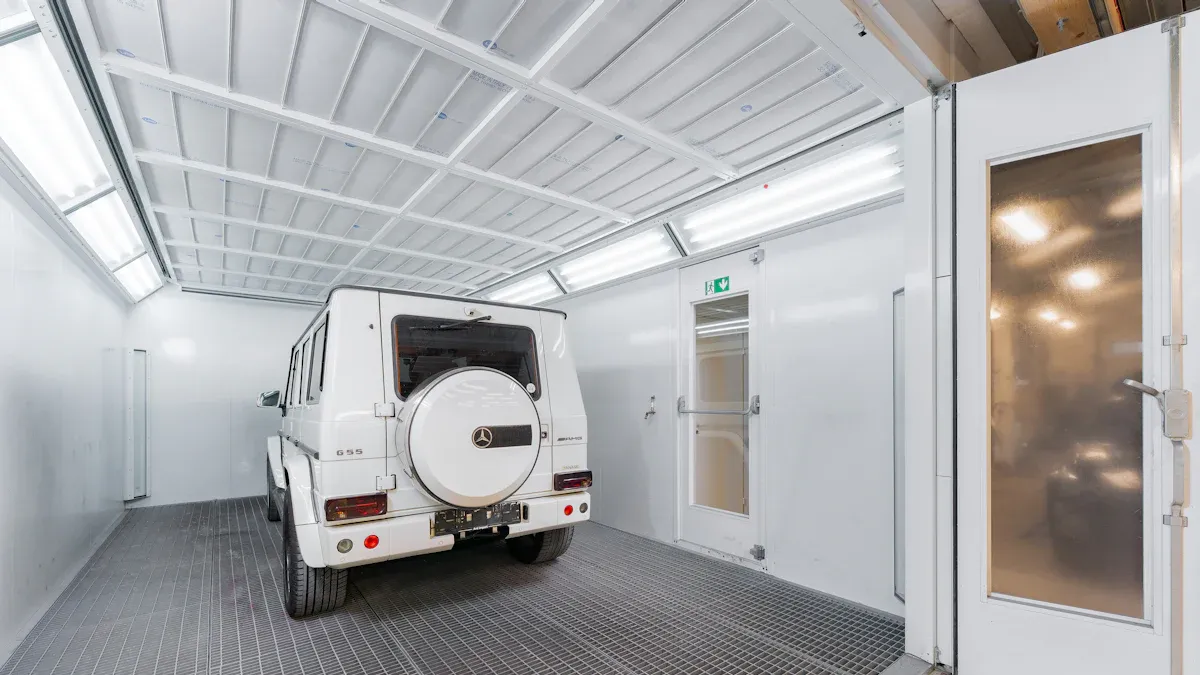
Choosing the right Truck Paint Booth starts with understanding the main booth types. Each design offers unique airflow patterns, installation requirements, and performance benefits. You must match the booth type to your shop’s size, budget, and quality standards.
Crossflow Booths
Crossflow booths remain popular in small and medium-sized auto body shops. Air flows from the front to the back, creating a lateral movement across the workspace. You benefit from cost savings and easy installation. These booths adapt well to various applications, including woodworking and refinishing jobs.
|
Paint Booth Type |
Description |
|---|---|
|
Crossflow Booths |
Air flows from the front to the back, ideal for medium and small refinishing jobs. |
|
Advantages |
Disadvantages |
|---|---|
|
Cost savings |
Risk of cross-contamination |
|
Ease of use |
Overspray can negatively impact quality |
|
High-quality finish when maintained |
|
Tip: Crossflow booths offer affordability and flexibility. You must maintain them well to achieve consistent paint quality.
Downdraft Booths
Downdraft booths deliver superior paint finish quality. Air enters from the ceiling and moves vertically downward, then exits through the floor. This vertical airflow removes overspray and prevents contaminants from settling on surfaces. You achieve a smooth, flawless finish, which is essential for high-end automotive work.
|
Paint Booth Type |
Description |
|---|---|
|
Full-Downdraft Booths |
Air is drawn from the top and exhausted through the floor, providing the best overspray control. |
Downdraft booths require a larger investment, but you gain unmatched paint quality and compliance with industry standards.
Semi-Downdraft & Side-Draft
Semi-downdraft and side-draft booths combine features of crossflow and downdraft designs. Air enters from the top and sides, improving ventilation and paint quality. Side-draft booths move air downward and sideways, offering high efficiency and energy conservation.
|
Airflow Design |
Characteristics |
How It Works |
Applications |
|---|---|---|---|
|
Side Down Draft |
Combines aspects of Downdraft and Cross Draft; air moves downward and sideways. |
Air enters through ceiling filters, moves down, then sideways to the exhaust. |
Suitable for industries needing efficiency and energy conservation, like automotive repair shops. |
|
Cross Draft |
Air moves laterally across the workspace. |
Filtered air enters from one end and exits from the opposite end. |
Adaptable for various applications, ideal for woodworking and smaller-scale painting operations. |
- Semi-downdraft booths typically have higher installation costs due to the need for a pit or special floor setup.
- Side-draft booths are generally less expensive to install and easier to set up, as they do not require modifications to the floor.
- Estimated costs for paint booths range from $19,000 to $40,000, excluding freight shipping or assembly fees.
Note: You must weigh installation costs and maintenance needs against your shop’s workflow and quality goals. Selecting the right Truck Paint Booth ensures efficiency and long-term value.
Key Features & Installation
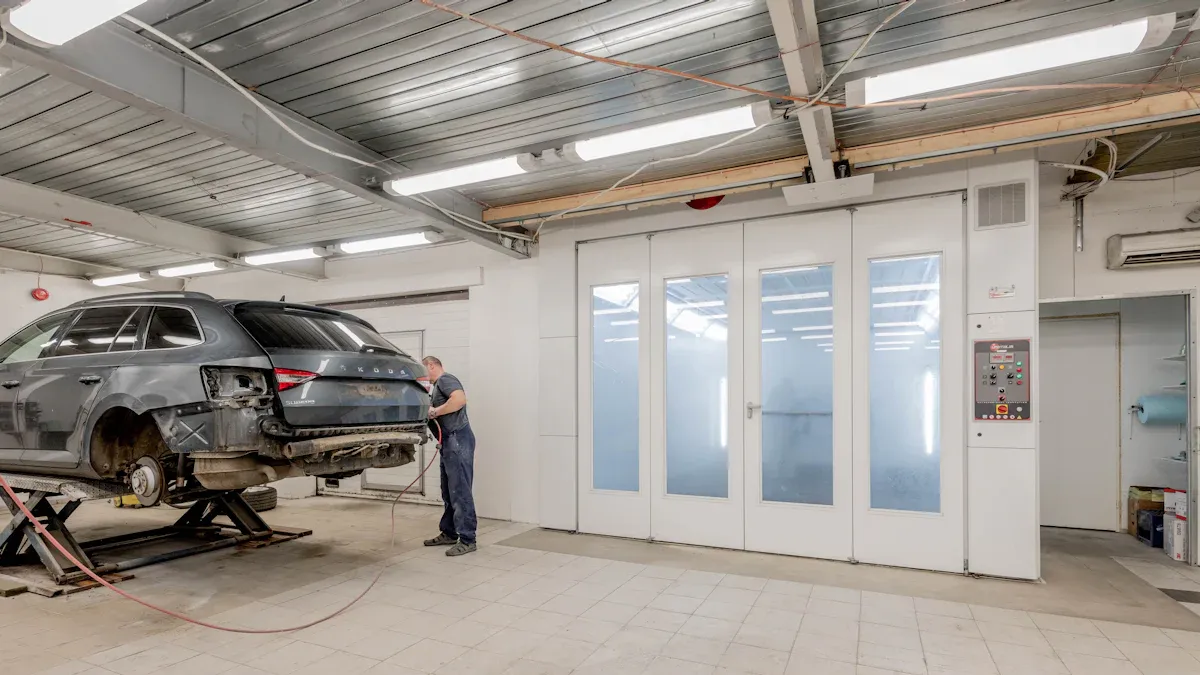
Airflow & Filtration
You must prioritize airflow and filtration when selecting a Truck Paint Booth. Proper airflow removes hazardous fumes and ensures a clean environment for both workers and vehicles. High-quality filtration systems capture overspray and volatile organic compounds (VOCs), which helps you meet strict environmental regulations.
|
Aspect |
Description |
|---|---|
|
Emission Control |
Captures VOCs and other pollutants, reducing environmental impact. |
|
Regulatory Adherence |
Ensures compliance with local and national environmental regulations. |
Leading brands offer advanced filtration solutions that support compliance and performance:
|
Brand |
Filtration Method |
Key Features |
|---|---|---|
|
Garmat |
Multi-stage filtration with fiberglass paint arrestor rolls and secondary filters |
Designed for waterborne paints, integrates carbon-based systems for VOC compliance |
|
Blowtherm |
Downdraft booths with premium-grade filters |
High-efficiency exhaust systems, handles modern paint technologies, maintains strong airflow |
|
GFS |
Proprietary filtration media with advanced airflow engineering |
Industry-best standards for intake filtration, innovative exhaust solutions |
Tip: Choose a booth with multi-stage filtration to protect your team and the environment.
Heating & Bake Options
Heating and bake options play a critical role in paint application and curing. You gain faster turnaround and improved durability when you use a booth with precise temperature control.
- Proper temperature regulation accelerates chemical reactions, leading to faster curing.
- Enhanced adhesion results in a more durable finish.
- Well-cured paint stands up to wear, chemicals, and environmental elements.
- Paint booth heaters ensure even curing and faster drying, which are crucial for a durable finish.
- Consistent heat helps paint bond effectively to surfaces, preventing issues like peeling or flaking.
Note: Heated booths deliver finishes that resist chips, scratches, and wear, which boosts customer satisfaction.
Shop Layout & Access
You must plan your shop layout carefully before installing a Truck Paint Booth. Consider these factors for optimal performance and safety:
- Ventilation and Airflow: Connect the booth to a robust ventilation system, ideally near exterior walls.
- Safety and Compliance: Position the booth away from high-traffic areas to protect workers and meet OSHA standards.
- Ease of Maintenance and Cleaning: Ensure easy access for routine maintenance and cleaning.
- Electrical and Utility Access: Place the booth near electrical outlets and compressed air lines.
- Environmental Considerations: Position the booth to comply with emission and waste disposal regulations.
Callout: Measure your available space and plan for future expansion to avoid costly modifications later.
Cost, Compliance & Manufacturer
Budget & Long-Term Value
You must balance your budget with operational needs and compliance requirements. Truck paint booths represent a significant investment, so you need to consider both upfront costs and long-term savings. New booths typically range from $15,000 to $60,000, while used options fall between $5,000 and $30,000. Installation costs average $25,000 to $60,000.
|
Cost Type |
Price Range |
|---|---|
|
New Paint Booth |
$15,000 - $60,000+ |
|
Used Paint Booth |
$5,000 - $30,000 |
|
Average Installed Cost |
$25,000 - $60,000 |
Energy-efficient features, such as heat recovery systems and smart controls, can reduce operational costs by up to 30%. Efficient curing technologies, like infrared or UV systems, also lower energy consumption. Investing in a high-quality booth improves finish quality, boosts productivity, and enhances safety. Over time, you save on materials and labor, and you can charge competitive rates for superior work.
Safety & Regulations
You must comply with strict safety and environmental standards. Paint booths protect technicians from harmful chemicals and reduce legal risks. Key regulations include NFPA 33 for fire safety, NFPA 13 for sprinkler systems, OSHA for worker protection, and NESHAP for pollution control.
|
Regulation |
Description |
|---|---|
|
NFPA 33 |
Fire safety for indoor spray paint applications |
|
NFPA 13 |
Sprinkler system requirements |
|
OSHA |
Worker safety standards |
|
NESHAP |
Pollution limits for paint operations |
Paint booths must use non-combustible materials. Electrical components require Class 1 Division 1 compliance. Ventilation systems must keep vapor levels below 25% of the Lower Explosive Limit. State and provincial codes may demand additional certifications, such as CSA labeling or ETLc-listed lighting.
Choosing a Reputable Manufacturer
You need to select a manufacturer with proven reliability and support. Look for certifications like NFPA or ISO. Evaluate customization options, technology features, and energy efficiency. Installation and after-sales support matter for ongoing maintenance and compliance.
-
Compliance & Certification
-
Customization & Flexibility
-
Technology & Automation
-
Energy Efficiency
-
Installation & Support
-
Pricing & Value
-
Reputation & References
-
Innovation & Future-readiness
Manufacturers offering preventive maintenance, troubleshooting, and repair services help you minimize downtime and extend equipment life. Routine inspections and filter replacements maintain clean airflow and high-quality finishes.
New vs. Used Booths
You must weigh the pros and cons of new versus used paint booths. New booths deliver consistent finishes, enhanced safety, and regulatory compliance. They increase property value and offer energy recovery features. Used booths cost less upfront but may lack documentation, warranty, and compliance. You risk unforeseen expenses and permitting issues.
|
Pros of New Booths |
Cons of New Booths |
|---|---|
|
Consistent paint finish |
High upfront investment |
|
Enhanced worker safety |
Ongoing maintenance |
|
Regulatory compliance |
Space and site preparation |
|
Increased property value |
Noise from blowers and heaters |
|
Energy recovery features |
Need for trained personnel |
|
Pros of Used Booths |
Cons of Used Booths |
|---|---|
|
Lower initial cost |
Uncertain condition |
|
Immediate availability |
Lack of documentation |
|
|
Difficult teardown and shipping |
|
|
Permitting issues |
|
|
No warranty coverage |
Tip: Leasing a new booth can reduce upfront costs. Buying new often leads to fewer maintenance and compliance issues over time.
You make the best choice when you match your truck paint booth to your shop’s needs. Consider both current requirements and future growth. Investing in a high-quality booth supports safety, efficiency, and business success.
- Lower operational costs result from reduced energy use and waste.
- Reliable booths minimize downtime and costly repairs.
- Compliance with safety standards protects your team and business.
Avoid common mistakes by maintaining filters, adjusting airflow, and training operators. Consult paint booth suppliers, define your space, and check local regulations. Take the next step with confidence and secure your shop’s future.
FAQ
What size booth do you need for commercial trucks?
You need a booth at least 20 meters long, 7 meters wide, and 5 meters high. Measure your largest vehicle and add extra space for safe access and workflow.
How often should you replace paint booth filters?
You should replace filters every 100 to 150 operating hours. Check manufacturer guidelines and inspect filters regularly for signs of clogging or reduced airflow.
Can you use waterborne paints in any booth?
You must use booths with proper ventilation and filtration for waterborne paints. Look for booths designed for waterborne technology to ensure compliance and quality.
What safety certifications should your booth have?
|
Certification |
Purpose |
|---|---|
|
NFPA 33 |
Fire safety |
|
OSHA |
Worker protection |
|
NESHAP |
Pollution control |
You need these certifications to meet legal and industry standards.
Is it better to buy or lease a truck paint booth?
- Buying offers long-term value and customization.
- Leasing reduces upfront costs and provides flexibility.
- You should choose based on your budget, business goals, and growth plans.