{ Bus Spray Booth }

  • How to Select the Right Truck Paint Booth for Your Shop

    You must prioritize fit when selecting a truck paint booth for your shop. The right choice depends on your vehicle sizes, workflow patterns, and budget constraints. Investing in a booth tailored to your operations boosts productivity and profitability. Batch painting streamlines scheduling, reduces cleaning time, and minimizes color mixing. High-quality booths improve airflow and decrease wait times. Smart technology and automation drive manufacturing efficiency, lower costs, and maximize uptime. Consider both your immediate needs and your long-term goals to make a confident decision.


    Key Takeaways

    • Assess your shop's needs by evaluating vehicle sizes, project volume, and paint types to choose the right booth.
    • Select a booth with proper airflow and filtration to ensure a clean environment and high-quality finishes.
    • Consider both new and used booths, weighing the benefits of compliance and safety against upfront costs.
    • Plan your shop layout carefully to enhance workflow, safety, and compliance with regulations.
    • Invest in a high-quality booth to boost productivity, reduce operational costs, and support long-term business growth.


    Define Your Shop’s Needs

    Selecting the right Truck Paint Booth starts with a clear assessment of your shop’s requirements. You must evaluate the types of vehicles you service, the volume of projects you handle, and any specialized paint processes you use. This approach ensures your investment supports both current operations and future growth.


    Vehicle Size & Booth Dimensions

    You need a booth that accommodates the largest vehicles you plan to paint. Commercial trucks, buses, and semi-trucks require substantial space. Consider both the exterior and interior dimensions of the booth to guarantee easy access and safe operation.

    Dimension Type

    Length (mm)

    Width (mm)

    Height (mm)

    Outside

    20156

    7006

    5800

    Inside

    20000

    5000

    5000


    Vehicle Type

    Length (m)

    Width (m)

    Height (m)

    Bus

    18-20

    6-8

    5-6

    Semi-Truck

    Larger dimensions may be required

    N/A

    N/A

    • Large sliding or roller doors allow easy entry and exit for oversized vehicles.
    • Work platforms or hydraulic lifts help painters reach all surfaces.
    • Durable materials, such as stainless steel, protect interior walls from wear.

    Tip: Always measure your shop’s available space before choosing a Truck Paint Booth. This step prevents installation issues and ensures smooth workflow.


    Project Volume & Workflow

    Your project volume determines the size and configuration of your Truck Paint Booth. High-throughput shops benefit from modular booths that adapt to changing demands. You must select a booth that fits various vehicle sizes and shapes, which increases flexibility and efficiency.

    • Modular booths adjust to fit different project volumes.
    • Efficient booth design supports high-quality finishes and quick turnaround.
    • Airflow patterns can be tailored to production needs, improving overspray control.

    Airflow Type

    Budget Level

    Overspray Control

    Installation

    Best For

    Crossflow

    $

    ⭐⭐

    Easy

    Entry-level, general use

    Semi-Downdraft

    $$

    ⭐⭐⭐

    Moderate

    Growing shops, better finishes

    Side Downdraft

    $$$

    ⭐⭐⭐⭐

    Advanced

    High-end shops, custom work

    Pitted Downdraft

    $$$$

    ⭐⭐⭐⭐⭐

    Complex

    Premium performance, high volume

    Note: Efficient workflow reduces downtime and maximizes productivity. You should plan booth placement to avoid bottlenecks and support smooth movement of vehicles.


    Paint Types & Special Requirements

    Different paint types require specialized booth features. Advanced filtration and temperature control are essential for high-quality finishes and compliance with environmental standards. You must identify the paints and coatings you use to select a booth with the right features.

    Type of Booth

    Specialized Features

    Full vehicle finishing lines

    Advanced filtration, temperature control

    Large equipment spray booths

    Advanced filtration, temperature control

    Prep and paint booths

    Advanced filtration, temperature control

    Powder coating booths

    Advanced filtration, temperature control

    Bench booths

    Advanced filtration, temperature control


    Feature

    Description

    Ventilation

    Removes hazardous fumes and maintains air circulation

    Filtration

    Traps overspray and airborne particles for flawless finish

    Climate Control

    Regulates temperature and humidity for optimal curing


    Feature

    Description

    Efficiency

    Meets stringent standards and provides environmentally friendly solutions

    Precision

    Ensures high-quality finishes through advanced features

    Safety

    Effectively manages fumes and contaminants for a clean working environment

    Callout: If you plan to expand your services or adopt new paint technologies, choose a Truck Paint Booth with modular designs and IoT capabilities. The industry expects a 6.4% compound annual growth rate from 2026 to 2033, driven by demand for high-quality finishes and environmental regulations.


    You must consider future growth when selecting booth specifications. Automation and advanced features support long-term business goals and keep your shop competitive.


    Truck Paint Booth Types
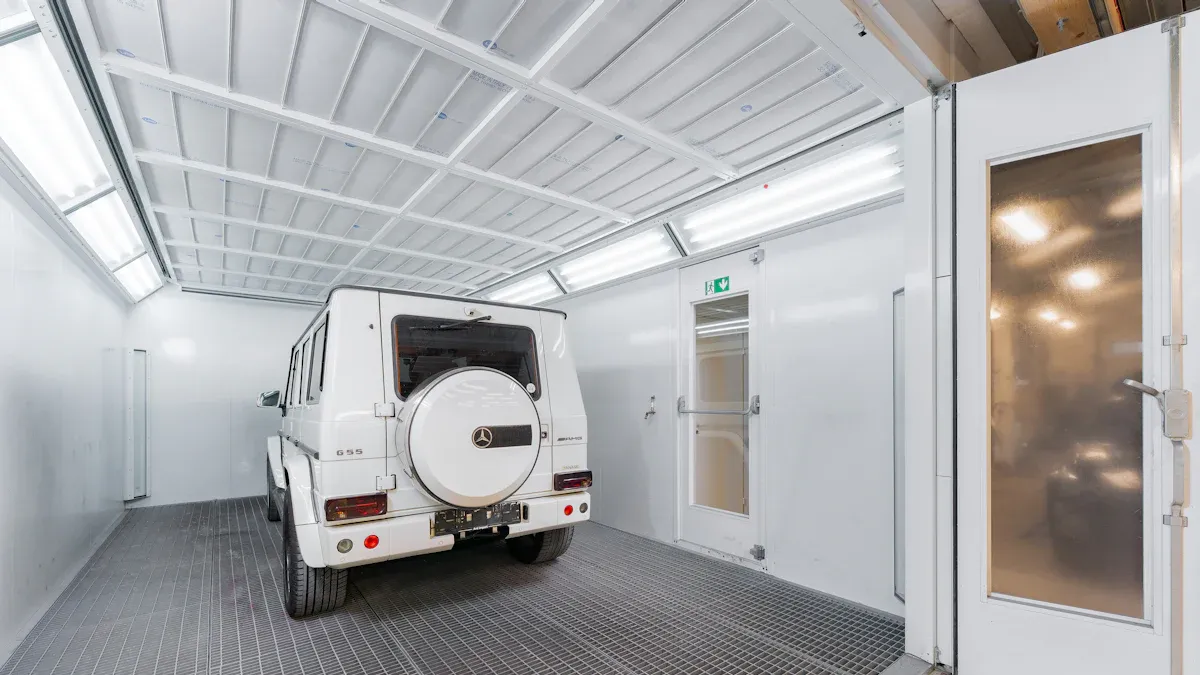
    Truck Paint Booth Types
    Image Source: pexels

    Choosing the right Truck Paint Booth starts with understanding the main booth types. Each design offers unique airflow patterns, installation requirements, and performance benefits. You must match the booth type to your shop’s size, budget, and quality standards.


    Crossflow Booths

    Crossflow booths remain popular in small and medium-sized auto body shops. Air flows from the front to the back, creating a lateral movement across the workspace. You benefit from cost savings and easy installation. These booths adapt well to various applications, including woodworking and refinishing jobs.

    Paint Booth Type

    Description

    Crossflow Booths

    Air flows from the front to the back, ideal for medium and small refinishing jobs.


    Advantages

    Disadvantages

    Cost savings

    Risk of cross-contamination

    Ease of use

    Overspray can negatively impact quality

    High-quality finish when maintained


    Tip: Crossflow booths offer affordability and flexibility. You must maintain them well to achieve consistent paint quality.


    Downdraft Booths

    Downdraft booths deliver superior paint finish quality. Air enters from the ceiling and moves vertically downward, then exits through the floor. This vertical airflow removes overspray and prevents contaminants from settling on surfaces. You achieve a smooth, flawless finish, which is essential for high-end automotive work.

    Paint Booth Type

    Description

    Full-Downdraft Booths

    Air is drawn from the top and exhausted through the floor, providing the best overspray control.

    Downdraft booths require a larger investment, but you gain unmatched paint quality and compliance with industry standards.


    Semi-Downdraft & Side-Draft

    Semi-downdraft and side-draft booths combine features of crossflow and downdraft designs. Air enters from the top and sides, improving ventilation and paint quality. Side-draft booths move air downward and sideways, offering high efficiency and energy conservation.

    Airflow Design

    Characteristics

    How It Works

    Applications

    Side Down Draft

    Combines aspects of Downdraft and Cross Draft; air moves downward and sideways.

    Air enters through ceiling filters, moves down, then sideways to the exhaust.

    Suitable for industries needing efficiency and energy conservation, like automotive repair shops.

    Cross Draft

    Air moves laterally across the workspace.

    Filtered air enters from one end and exits from the opposite end.

    Adaptable for various applications, ideal for woodworking and smaller-scale painting operations.

    • Semi-downdraft booths typically have higher installation costs due to the need for a pit or special floor setup.
    • Side-draft booths are generally less expensive to install and easier to set up, as they do not require modifications to the floor.
    • Estimated costs for paint booths range from $19,000 to $40,000, excluding freight shipping or assembly fees.

    Note: You must weigh installation costs and maintenance needs against your shop’s workflow and quality goals. Selecting the right Truck Paint Booth ensures efficiency and long-term value.


    Key Features & Installation
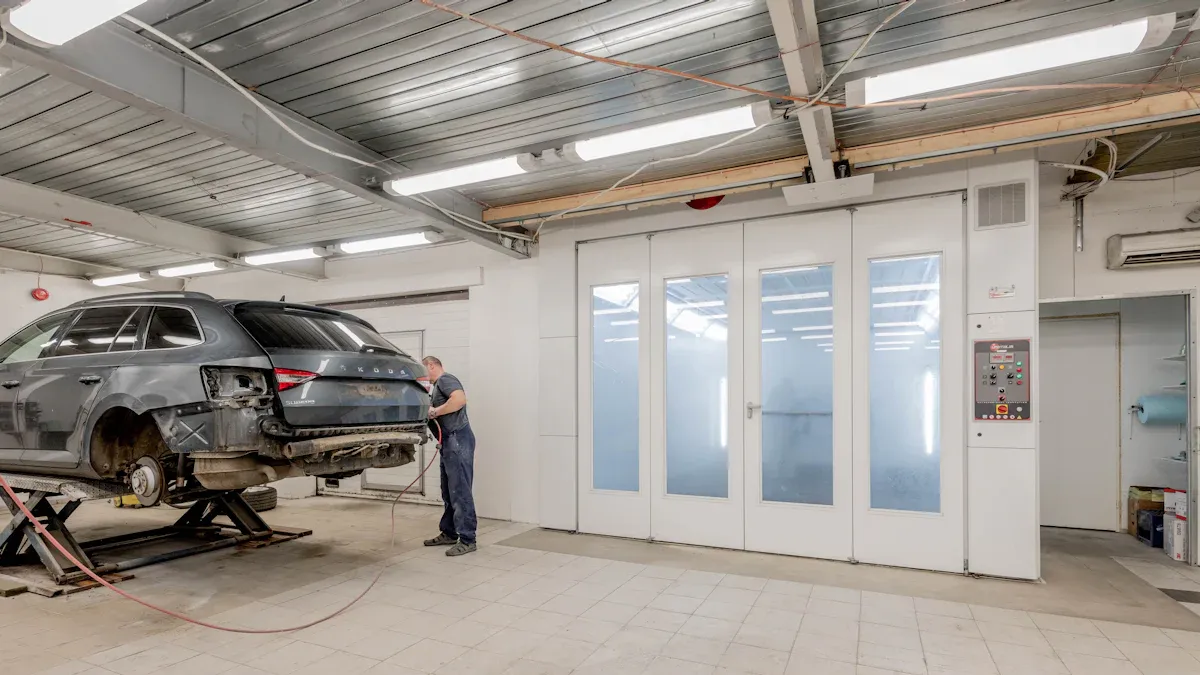
    Key Features & Installation
    Image Source: pexels

    Airflow & Filtration

    You must prioritize airflow and filtration when selecting a Truck Paint Booth. Proper airflow removes hazardous fumes and ensures a clean environment for both workers and vehicles. High-quality filtration systems capture overspray and volatile organic compounds (VOCs), which helps you meet strict environmental regulations.

    Aspect

    Description

    Emission Control

    Captures VOCs and other pollutants, reducing environmental impact.

    Regulatory Adherence

    Ensures compliance with local and national environmental regulations.


    Leading brands offer advanced filtration solutions that support compliance and performance:

    Brand

    Filtration Method

    Key Features

    Garmat

    Multi-stage filtration with fiberglass paint arrestor rolls and secondary filters

    Designed for waterborne paints, integrates carbon-based systems for VOC compliance

    Blowtherm

    Downdraft booths with premium-grade filters

    High-efficiency exhaust systems, handles modern paint technologies, maintains strong airflow

    GFS

    Proprietary filtration media with advanced airflow engineering

    Industry-best standards for intake filtration, innovative exhaust solutions

    Tip: Choose a booth with multi-stage filtration to protect your team and the environment.


    Heating & Bake Options

    Heating and bake options play a critical role in paint application and curing. You gain faster turnaround and improved durability when you use a booth with precise temperature control.

    • Proper temperature regulation accelerates chemical reactions, leading to faster curing.
    • Enhanced adhesion results in a more durable finish.
    • Well-cured paint stands up to wear, chemicals, and environmental elements.
    • Paint booth heaters ensure even curing and faster drying, which are crucial for a durable finish.
    • Consistent heat helps paint bond effectively to surfaces, preventing issues like peeling or flaking.

    Note: Heated booths deliver finishes that resist chips, scratches, and wear, which boosts customer satisfaction.


    Shop Layout & Access

    You must plan your shop layout carefully before installing a Truck Paint Booth. Consider these factors for optimal performance and safety:

    • Ventilation and Airflow: Connect the booth to a robust ventilation system, ideally near exterior walls.
    • Safety and Compliance: Position the booth away from high-traffic areas to protect workers and meet OSHA standards.
    • Ease of Maintenance and Cleaning: Ensure easy access for routine maintenance and cleaning.
    • Electrical and Utility Access: Place the booth near electrical outlets and compressed air lines.
    • Environmental Considerations: Position the booth to comply with emission and waste disposal regulations.

    Callout: Measure your available space and plan for future expansion to avoid costly modifications later.


    Cost, Compliance & Manufacturer

    Budget & Long-Term Value

    You must balance your budget with operational needs and compliance requirements. Truck paint booths represent a significant investment, so you need to consider both upfront costs and long-term savings. New booths typically range from $15,000 to $60,000, while used options fall between $5,000 and $30,000. Installation costs average $25,000 to $60,000.

    Cost Type

    Price Range

    New Paint Booth

    $15,000 - $60,000+

    Used Paint Booth

    $5,000 - $30,000

    Average Installed Cost

    $25,000 - $60,000

    Energy-efficient features, such as heat recovery systems and smart controls, can reduce operational costs by up to 30%. Efficient curing technologies, like infrared or UV systems, also lower energy consumption. Investing in a high-quality booth improves finish quality, boosts productivity, and enhances safety. Over time, you save on materials and labor, and you can charge competitive rates for superior work.


    Safety & Regulations

    You must comply with strict safety and environmental standards. Paint booths protect technicians from harmful chemicals and reduce legal risks. Key regulations include NFPA 33 for fire safety, NFPA 13 for sprinkler systems, OSHA for worker protection, and NESHAP for pollution control.

    Regulation

    Description

    NFPA 33

    Fire safety for indoor spray paint applications

    NFPA 13

    Sprinkler system requirements

    OSHA

    Worker safety standards

    NESHAP

    Pollution limits for paint operations

    Paint booths must use non-combustible materials. Electrical components require Class 1 Division 1 compliance. Ventilation systems must keep vapor levels below 25% of the Lower Explosive Limit. State and provincial codes may demand additional certifications, such as CSA labeling or ETLc-listed lighting.


    Choosing a Reputable Manufacturer

    You need to select a manufacturer with proven reliability and support. Look for certifications like NFPA or ISO. Evaluate customization options, technology features, and energy efficiency. Installation and after-sales support matter for ongoing maintenance and compliance.

    1. Compliance & Certification

    2. Customization & Flexibility

    3. Technology & Automation

    4. Energy Efficiency

    5. Installation & Support

    6. Pricing & Value

    7. Reputation & References

    8. Innovation & Future-readiness

    Manufacturers offering preventive maintenance, troubleshooting, and repair services help you minimize downtime and extend equipment life. Routine inspections and filter replacements maintain clean airflow and high-quality finishes.


    New vs. Used Booths

    You must weigh the pros and cons of new versus used paint booths. New booths deliver consistent finishes, enhanced safety, and regulatory compliance. They increase property value and offer energy recovery features. Used booths cost less upfront but may lack documentation, warranty, and compliance. You risk unforeseen expenses and permitting issues.

    Pros of New Booths

    Cons of New Booths

    Consistent paint finish

    High upfront investment

    Enhanced worker safety

    Ongoing maintenance

    Regulatory compliance

    Space and site preparation

    Increased property value

    Noise from blowers and heaters

    Energy recovery features

    Need for trained personnel


    Pros of Used Booths

    Cons of Used Booths

    Lower initial cost

    Uncertain condition

    Immediate availability

    Lack of documentation


    Difficult teardown and shipping


    Permitting issues


    No warranty coverage

    Tip: Leasing a new booth can reduce upfront costs. Buying new often leads to fewer maintenance and compliance issues over time.


    You make the best choice when you match your truck paint booth to your shop’s needs. Consider both current requirements and future growth. Investing in a high-quality booth supports safety, efficiency, and business success.

    • Lower operational costs result from reduced energy use and waste.
    • Reliable booths minimize downtime and costly repairs.
    • Compliance with safety standards protects your team and business.

    Avoid common mistakes by maintaining filters, adjusting airflow, and training operators. Consult paint booth suppliers, define your space, and check local regulations. Take the next step with confidence and secure your shop’s future.


    FAQ

    What size booth do you need for commercial trucks?

    You need a booth at least 20 meters long, 7 meters wide, and 5 meters high. Measure your largest vehicle and add extra space for safe access and workflow.

    How often should you replace paint booth filters?

    You should replace filters every 100 to 150 operating hours. Check manufacturer guidelines and inspect filters regularly for signs of clogging or reduced airflow.

    Can you use waterborne paints in any booth?

    You must use booths with proper ventilation and filtration for waterborne paints. Look for booths designed for waterborne technology to ensure compliance and quality.

    What safety certifications should your booth have?

    Certification

    Purpose

    NFPA 33

    Fire safety

    OSHA

    Worker protection

    NESHAP

    Pollution control

    You need these certifications to meet legal and industry standards.

    Is it better to buy or lease a truck paint booth?

    • Buying offers long-term value and customization.
    • Leasing reduces upfront costs and provides flexibility.
    • You should choose based on your budget, business goals, and growth plans.
  • Top Tips for Boosting Automotive Spray Booth Efficiency


    You need your automotive spray booth to function effectively every time. This ensures your shop stays on track and operates smoothly. Many shops encounter similar issues that can hinder productivity or compromise safety. These challenges include maintenance, the layout of the body shop, lighting, storage, and the paint process. The table below outlines some common problems that can reduce the efficiency of your automotive paint booths:

    Challenge Type Description
    Maintenance Taking care of paint booth filters is crucial for safety and ensuring the booth operates effectively.
    Body Shop Layout The arrangement of your shop can slow down operations; placing items in optimal locations helps work progress faster.
    Proper Lighting Improved lighting aids in color matching and enhances the quality of paint jobs, contributing to smoother operations.
    Safety and Storage Adequate storage for flammable and toxic materials keeps personnel safe and facilitates quicker work completion.
    Paint and Refinish Process The methods you use to paint and finish vehicles can significantly impact the speed and quality of your work.

    You should evaluate the current setup of your shop, whether you utilize a truck spray boothcar spray booth, or another type of automotive paint booth. Even minor adjustments can lead to substantial improvements in efficiency and help you achieve the best results from your automotive spray booth.


    Key Takeaways

    • It is very important to take care of filters and ducts. Clean filters help air move well and keep workers safe.
    • Make your spray booth set up in a smart way. Keep tools and supplies near where you work to save time.
    • Use good lighting so you can see better. Try to get a Color Rendering Index of 90 or more for the best color match.
    • Keep the booth at the right temperature and humidity. This helps paint dry well and makes the work look better.
    • Teach your staff about safety and how to do things right. Workers who know what to do make fewer mistakes and work faster.
    •  

    Booth Layout and Space Efficiency

    automotive paint booths


    Optimizing Space for Large Parts

    You must think about your paint spray booth layout. This helps you handle big car parts. A good booth design stops slowdowns and makes jobs go faster. You can set up workstations in order to avoid crowding. This lets you move cars and parts easily at each step. If your paint spray booth is in a bad spot, you waste time moving cars. This makes your work slower. Measure your shop to check if your paint spray booth fits well. Make sure people can walk around easily. Pick a booth type that fits your space and how you work. Downdraft booths are best for big vehicles. Crossdraft booths are better for smaller jobs.

    Tips for optimizing space:

    • Keep walkways open so people can get around.
    • Put tools and supplies close to where you work.
    • Use small booths for tiny shops and big booths for busy shops.
    •  

    Planning Overhead and Exit Access

    Having enough space above and good exits keeps your paint spray booth safe. The exit vent takes away dangerous fumes and paint spray. It also removes harmful chemicals. A good exhaust system keeps the air moving out. This stops bad air from coming in. You need fans that move at least 100 feet of air each minute. The exhaust system should be close to the floor, within 18 inches, to help air go out.

    Requirement Description
    Mechanical Ventilation Moves at least 100 linear feet of air per minute
    Exhaust System Directs airflow toward an outlet vented outside, installed within 18 inches of the floor
    Safety Features Includes visual gauges, audible alarms, and pressure-activated devices


    Organizing Interior Features

    Keeping things neat inside your paint spray booth helps you work better. Air should move straight from where it comes in to where it goes out. This stops messy paint spray and keeps the air clean. Small shops use booths that save space. Big shops use full down-draft booths for better air control. Workstations that fit people well help painters feel good and stay healthy. Clean work areas make things safer and faster. You can use cabinets with locks and shelves that you can move for storage.

    Strategy Description
    Airflow Optimization Align airflow from intake to exhaust to reduce overspray
    Booth Selection Choose booth type based on shop size and workflow
    Ergonomic Workstations Use adjustable platforms and seating for painter comfort
    Efficient Storage Keep workspaces clutter-free with cabinets and shelving

    If you plan your paint spray booth layout well, you can work faster and keep your shop running without problems.


    Airflow for Spray Booth Efficiency


    Assessing and Adjusting Airflow

    You should check the airflow in your spray booth often. Good airflow helps paint jobs look smooth. It also keeps workers safe. If airflow is too low, paint can look rough. Bad airflow can also make the booth unsafe. Look at the table below to see what happens with poor ventilation:

    Impact Type Description
    Paint Quality Not enough airflow causes rough paint and mistakes that need fixing.
    Worker Safety Bad ventilation lets dangerous fumes build up, which can cause fires or health problems.

    You can use airflow meters to see how air moves in your booth. Change fans and vents to keep air moving right. This stops extra paint spray and keeps the booth safe.


    Maintaining Filters and Ducts

    You should clean and change filters often. Dirty filters slow down air and make work harder. Paint can pile up in ducts and block air. Check ducts for paint and clean them when needed. Doing this helps filters last longer and keeps your booth working well.

    • Clean filters so air moves well.
    • Change filters when they get dirty.
    • Look at ducts for paint build-up.
    • Clean ducts so air can flow.

    Clean filters and ducts help your booth work better and keep workers safe from bad fumes.


    Controlling Temperature and Humidity

    You need to control temperature and humidity in your spray booth. Paint dries best when these are just right. If it is too cold, paint dries slowly and can look bad. If it is too hot, paint dries too fast. Humidity also matters. High humidity makes paint dry slower. Low humidity can make paint not stick well. The table below shows how these things change drying times:

    Factor Influence on Curing Times
    Temperature Cold slows drying and can cause problems; hot makes paint dry too fast.
    Humidity High humidity slows drying, low humidity can make paint dry too fast and not stick.

    Paint booths use control systems to keep temperature and humidity steady. This helps you get good results every time and do less rework. You should watch these levels to keep your booth working well.


    Routine Maintenance for Paint Booth Efficiency


    Scheduling Regular Maintenance

    You need a good maintenance plan to keep your paint booth working well. Doing regular maintenance helps stop problems and keeps your equipment running. If you follow the rules, you will get better results and fewer surprises. Use the table below to help you plan your maintenance tasks:

    Maintenance Task Frequency Importance
    Filter Upkeep and Replacement Days, weeks, or months Needed for clean air and good booth performance.
    Keeping the Booth Clean Regularly Stops dirt from building up and hurting paint jobs.
    Yearly Inspection At least once a year Finds problems before they get worse.
    Troubleshooting and Repairing As needed Keeps the booth safe and stops more damage.

    You should check your booth every day to meet EPA and OSHA rules. Daily checks help you find problems early and keep your booth safe.


    Quick Troubleshooting

    If you see a problem in your booth, fix it fast. Quick fixes keep your booth working well and stop bigger issues. Here are some common problems and what you can do:

    Issue Troubleshooting Steps Prevention Strategies
    Poor Airflow Look at filters, check fans, make sure vents are clean Check filters often, keep fans set right
    Contaminants in the Finish Keep the booth clean, check for dust, make sure booth is sealed Clean often, change filters, keep doors closed
    Uneven or Poor Paint Coverage Adjust spray guns, watch temperature and humidity Keep booth conditions steady, follow paint instructions
    Overspray Issues Change spray gun settings, fix airflow Set spray guns right, use screens to catch overspray
    Filter Clogging Check and change filters often Change filters on schedule to stop clogging

    Fixing problems quickly keeps your work fast and your shop busy.


    Cleaning and Filter Changes

    Regular maintenance means cleaning and changing filters. Dirty filters make your booth work worse and can break it. Change the paint arrestor filter every month. Change the burner filter every three to four months. Change the ceiling filter about once a year. Disposable filters do not last forever. If you forget to change them, you could have expensive repairs and bad air. Plan your filter changes based on how much you use your booth and what you spray. Changing filters often keeps air clean, helps you follow rules, and makes your paint jobs better. Cleaning the booth and checking seals also stops dirt from ruining your work.

    Tip: Doing regular maintenance is the best way to keep your booth working well and avoid surprise problems.


    Workflow and Organization


    Efficient Layout and Material Handling

    You can boost efficiency in your spray booth by keeping your workspace neat and easy to use. When you set up your booth with clear paths, you move parts and tools faster. You should place paint supplies and equipment close to where you work. This saves time and keeps your workflow smooth. Many shops use floor staging to organize parts outside the booth. This method helps you find what you need quickly and keeps the booth clear for painting. You can use carts or shelves to store parts and tools. When you keep everything in its place, you avoid delays and mistakes.

    Tip: An organized workflow helps you finish jobs faster and keeps your shop running smoothly.


    Planning Daily Workloads

    You need to plan your daily tasks to optimize workflow efficiency. Building a schedule for your booth lets you know what jobs come next. You can plan for extra cycles and avoid bottlenecks. When you remove parts from vehicles before painting, you free up space in the booth. This lets you process more jobs each day. You should write down your schedule and share it with your team. Everyone knows what to expect and can prepare for each step.

    Method Description
    Effective Scheduling Build a booth schedule to maximize productivity and plan for extra cycles.
    Parts Off Painting Remove parts from vehicles to free up booth space and process more jobs.
    Strategic Workspace Organization Use floor staging to organize parts outside the booth for efficient use of space.


    Standardizing Procedures

    You can improve efficiency by using standard steps for each job. When you follow the same process every time, you reduce errors and speed up your workflow. You should write down your procedures and train your team to follow them. This helps everyone know what to do and keeps your booth running well. You can use checklists to make sure you do each step. Standardizing your workflow makes it easier to spot problems and fix them quickly.

    Note: Standard procedures help you keep quality high and make your workflow predictable.


    Lighting and Visibility


    Proper Lighting for Quality Control

    You need proper lighting in your spray booth to see every detail of your work. Good lighting helps you spot flaws before they become bigger problems. When you use the right lights, you improve both quality and efficiency. You also make your booth a safer place to work.

    The table below shows the recommended lighting levels for automotive spray booths:

    Metric Recommended Level
    Illuminance (Lux) 750 to 1500 lux (application), >2000 lux (inspection)
    Color Rendering Index 90 or above
    Color Temperature (K) 5000K to 6500K

    You should aim for an illuminance of at least 750 lux when applying paint. For inspection, use over 2000 lux. A high Color Rendering Index (CRI) of 90 or above lets you see true colors and small defects. This level of proper lighting helps you avoid costly mistakes and rework.

    Tip: Use lights with a color temperature between 5000K and 6500K. This range looks like natural daylight and helps you see colors clearly.


    Accurate Color Matching

    You want your paint jobs to match perfectly every time. Accurate color matching depends on the quality of your lighting. If your booth uses low CRI lights, you may not see color differences. This can lead to mismatched panels and unhappy customers. High CRI lighting helps you spot even small changes in color.

    • A CRI of 90 or above is best for color matching.
    • High CRI lighting lets you see defects and color shifts.
    • Low CRI can cause mistakes and extra work.

    When you use proper lighting, you boost your shop’s efficiency. You finish jobs faster and with better results. You also keep your team safe by making sure they can see their work clearly.

    Remember: Good lighting is not just about seeing better. It is about working smarter and improving every part of your process.


    Paint and Coating Management


    Storage and Handling Best Practices

    You must store paint and coatings carefully. This keeps your spray booth safe and efficient. Good storage stops contamination and helps you get better paint jobs. Here are some best ways to store paint:

    • Keep paint between 60°F and 80°F. This keeps paint fresh and ready.
    • Make sure your storage area has good ventilation. This removes dangerous fumes.
    • Put paint in fire-rated cabinets. This lowers fire risks and follows safety rules.
    • Label each container with its name, safety instructions, and expiration date. This helps you find things fast and manage your inventory.
    • Seal containers tightly after using them. This stops fumes from escaping and keeps dust out.

    When you organize your paint and refinish steps, you lower accidents and keep materials in good shape.


    Reducing Paint Waste

    You can make your shop more efficient by using less paint. Wasting paint costs money and hurts the environment. Always measure paint before mixing. This helps you use only what you need. Clean spray guns right after each job. This keeps them working well and stops leftover paint from drying inside. Use the right spray techniques to cover surfaces evenly. This lowers overspray and saves paint.

    Method How It Reduces Waste
    Accurate Mixing Stops extra paint from being left over
    Proper Gun Cleaning Keeps paint from hardening and clogging tools
    Efficient Spraying Lowers overspray and saves paint
    Inventory Rotation Uses older paint first so it does not spoil

    Track how much paint you use for each job. This helps you see patterns and improve your paint and refinish steps.

    Tip: Using less paint means your shop is cleaner and more efficient.


    Staff Training

    You must teach your team how to handle paint and store it right. Well-trained staff know how to mix, store, and apply coatings safely. Training helps everyone follow the right steps and avoid mistakes. Teach your team about safety rules, mixing paint, and using equipment. When your staff understands the process, you waste less paint and get better results. Regular training keeps everyone up to date and helps your shop work better.


    Safety in Automotive Spray Booths


    Compliance with OSHA and EPA

    You have to follow OSHA and EPA rules to keep your spray booth safe. These rules help protect you and your team from dangerous fumes and accidents. Here are some important things you must do:

    • Get your respirator fit tested every year.
    • Wear gloves, eye protection, and special clothing that resist chemicals.
    • Put up emergency steps for isocyanate exposure and keep first aid close by.
    • Take OSHA Hazard Communication and PPE training every year.
    • Let the booth air out for a set time before going back in after spraying.

    OSHA wants to make sure your work area is safe. Rules like 29 CFR 1910.107 and 1910.94 are about spray finishing and keeping air clean.

    The EPA says you must keep records of how you use and care for your booth. You need to write down when you change filters, plan yearly checks, and train everyone on the rules. The EPA also limits emissions and says you must use strong exhaust filters to catch overspray and VOCs.

    If you follow these safety rules, your booth works better. You waste less, stay safe from harm, and avoid doing jobs over.


    Safety Training and PPE

    You need safety training to learn about dangers in a spray booth. Training teaches you how to use personal protective equipment the right way. The right PPE keeps you safe from chemicals and injuries. You should use:

    • An ambient air pump
    • A full face mask with positive pressure and a hood
    • A Tyvek or chemical-resistant suit
    • Gloves and boots

    Wearing PPE and taking safety training keeps you safe at work. It also helps you follow safety rules and makes your booth work better.


    Integrating Safety into Booth Design

    You can make your booth safer by adding special safety features. The table below shows how each feature helps:

    Safety Feature Impact on Safety
    Airflow Pushes dust to the collector and lowers breathing risks.
    Lighting Bright lights help you see better and make fewer mistakes.
    Partial floor recovery systems Less cleaning by hand means fewer slips and falls.
    Blast hose and nozzle checks Stops problems that could cause accidents.
    Material handling equipment Makes it easier and safer to move heavy parts.

    When you plan your booth with safety in mind, you protect your team. A safe booth means fewer accidents, better work, and higher quality jobs.


    Energy Optimization


    Efficient Lighting and Motors

    You can save a lot of energy in your spray booth by upgrading your lighting and motor systems. New LED lighting uses less power and gives you brighter, clearer light for painting. This helps you see better and finish jobs with higher quality. When you switch to energy-efficient motors, you cut down on electrical and fuel costs. You can save at least 30% on your energy bills by making these changes. Many shops use Economy Mode when the spray gun is not in use. This simple step can save thousands of dollars each year. Better lighting also boosts productivity because you and your team can see every detail.

    • Upgrade to LED lighting for brighter workspaces.
    • Use energy-efficient motors to lower costs.
    • Turn on Economy Mode when not spraying.

    Tip: Small changes in lighting and motor use can lead to big savings over time.


    Scheduling Booth Operation

    You can lower your energy use by planning when you run your spray booth. Try to group similar jobs together for batch painting. This reduces the number of times you need to heat or ventilate the booth. You should also schedule work during off-peak hours to take advantage of lower energy rates. Training your team on energy-saving habits helps keep your booth running at top efficiency. When you reduce active booth time, you save energy and money.

    • Group jobs for batch painting.
    • Use the booth during off-peak hours.
    • Train staff on energy-saving practices.
    •  

    Monitoring Energy Use

    You should track how much energy your booth uses. This helps you find ways to save even more. Many shops use smart control systems to watch energy use in real time. Some systems have cut energy use by 20%. In some climates, new technology has reduced energy costs by over 40%. When you invest in energy-efficient tools and keep an eye on your usage, you lower your total costs and make your shop more efficient.

    Benefit Result
    Lower energy bills More money for your business
    Less maintenance needed Fewer repairs and downtime
    Better booth performance Higher quality paint jobs

    Note: Tracking energy use helps you make smart choices for long-term savings.


    You can make your automotive spray booth work better by changing how it is set up. Doing regular maintenance and keeping things organized also helps. Good lighting lets you see mistakes and finish jobs quickly. Safety steps keep your team safe and help them stay at your shop longer. If you look at your work and change how you do things, you use less energy and spend less money. You might get tax breaks or grants for making your shop more eco-friendly. Many people want shops that follow environmental rules. Your team can stay healthier and miss fewer days at work.

    • Utility bills can go down by 25% with new spray technology.
    • Eco upgrades can cover up to 40% of costs.
    • Keeping your shop safe can help you keep 15% more workers.

    Learn about new tools and ways to work better. Check your booth often and fix things when you need to.


    FAQ


    How often should you change spray booth filters?

    You should check filters weekly. Change them when you see dust or paint build-up. Most shops replace intake filters every month and ceiling filters once a year. Clean filters help your booth work better and keep the air safe.

    What is the best lighting for color matching in a spray booth?

    You need lights with a color temperature of 5000K to 6500K and a Color Rendering Index (CRI) of 90 or higher. These lights show true colors and help you spot mistakes.

    Why does airflow matter in a spray booth?

    Good airflow removes fumes and dust. It keeps paint jobs smooth and protects your health. Poor airflow can cause rough finishes and unsafe air.

    How can you reduce paint waste in your shop?

    • Measure paint before mixing.
    • Clean spray guns after each use.
    • Use the right spray technique.

    These steps help you save money and protect the environment.