{ Control Arm Bushing }

  • Why should we choose a hydraulic bushing?

    |

    Why can’t you hear the sound of metal scraping against metal when a car is driving on a bumpy road?

    Why do we often say that a car feels ‘soft’ or ‘stiff’? How is this achieved through suspension tuning?


    That’s right—it’s all down to the car’s bushings! Bushings serve to absorb shocks, reduce friction, extend the life of components and enhance comfort. Who would have thought such a small component could have such a powerful impact!


    In a car’s chassis, the various components and articulation points are not mechanically linked; instead, they are connected by rubber bushings made primarily from rubber. These bushings are positioned at the endpoints of the suspension geometry—in other words, at the points where forces are concentrated. Lateral, longitudinal and vertical forces from the chassis all act upon the surface of the rubber bushings, subjecting these rubber components to heavy loads over extended periods.

    The quality of the bushing design directly reflects the performance of the vehicle, so high-quality bushing design is of paramount importance!

    The bushings used in cars are mainly divided into rubber bushings and hydraulic bushings. Why are hydraulic bushings considered ‘superior’?


    Hydraulic bushings provide a better stiffness curve


    Hydraulic bushings feature a complex structure and are among the most technically sophisticated and high-value-added products in the bushing category.
    The internal cavity of the bushing is filled with hydraulic fluid; when subjected to external pressure, this allows for varying degrees of stiffness, providing an improved stiffness curve that helps enhance the vehicle’s overall driving performance.
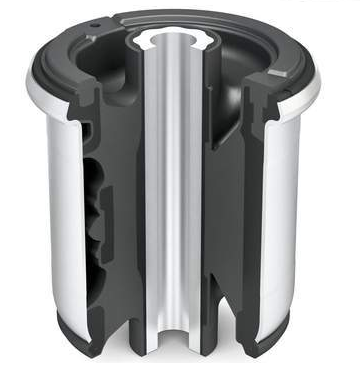

    Control Arm Bushing


    Hydraulic bushings provide excellent shock absorption


    Compared to standard automotive rubber bushings, the most significant improvement offered by hydraulic bushings is that they break the direct correlation between the softness of the rubber and the damping characteristics of the bushing.
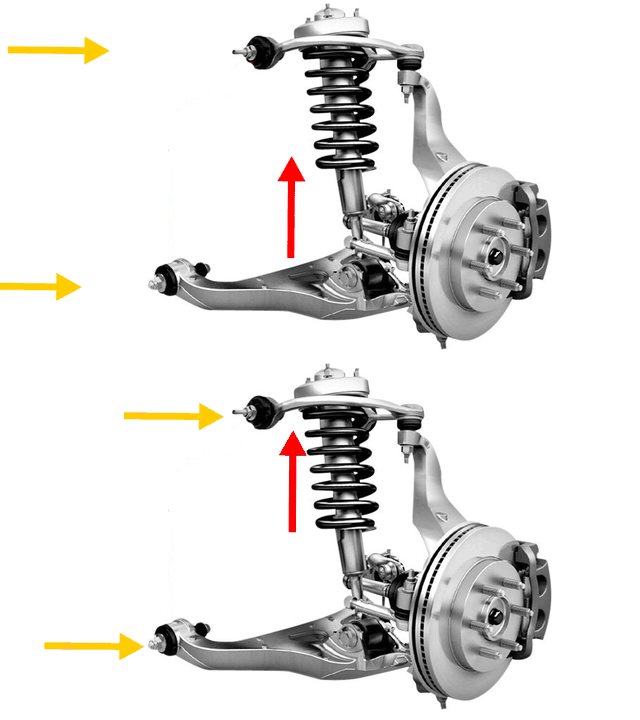

    Control Arm Bushing


    As shown in the diagram above, the outer layer of the hydraulic bushing is still made of the familiar rubber material, but inside the rubber, numerous chambers and channels have been designed and filled with hydraulic fluid.
    Consequently, when the suspension moves and compresses the hydraulic bushing, the hydraulic fluid flows to the opposite side, where it generates damping through hydraulic pressure. In this way, the hydraulic bushing ensures shock absorption in the initial stage using soft rubber, whilst simultaneously providing damping force in the final stage to prevent unnecessary vibrations, delivering a suspension effect that is soft at the front and resilient at the rear.
    If, at this point, the vehicle’s suspension tuning is also of a high standard, the chassis will be able to handle road bumps with ease, delivering a superior ride quality to the occupants.


    The hydraulic suspension system on the Nafurancar is designed in accordance with the original factory specifications, ensuring the same high standards as the original equipment. This enhances not only the driving performance of the entire vehicle, but also the driving experience for passengers.
  • What are automotive bushings? What is their function?

    |

    If you hear a ‘creaking’ noise coming from the car’s chassis, accompanied by the steering wheel pulling to one side whilst driving, it could be a problem with the suspension bushings. Today, we’ll take a look at what you need to know about car bushings.


    What is an automotive bushing?


    In mechanical design, the connection of moving parts is a common requirement; however, relative motion between components can easily lead to friction and wear. To address this issue, flexible coupling solutions are widely adopted—not only do they effectively reduce wear, but they also make replacement more convenient and cost-effective should wear and damage occur later on. It is for this reason that industrial bushings have come into being. 


    In the automotive sector, bushings are elastic, flexible connecting components installed at the joints of moving parts such as the chassis suspension system and control arms. They are typically made from elastic materials such as rubber or polyurethane (or a composite structure combining a metal skeleton with an elastic material), and their core function is to replace rigid connections, thereby resolving the issue of friction and wear caused by the relative movement of components. 


    Put simply, they act as a ‘shock absorber and wear-resistant joint’ between chassis components.


    What is the purpose of a bushing?


    Chassis bushings play a crucial role in the construction of a vehicle’s chassis. Their primary function is to connect the chassis to the suspension system, preventing rigid connections, protecting metal components and absorbing shocks, thereby ensuring the vehicle’s stability and comfort whilst in motion. Chassis bushings must not only bear the vehicle’s weight and inertia but also cope with a variety of complex road conditions and driving scenarios. A high-performance chassis bushing can significantly enhance the vehicle’s ride quality, reduce tyre wear and suspension fatigue, and provide the driver with a more enjoyable driving experience. 


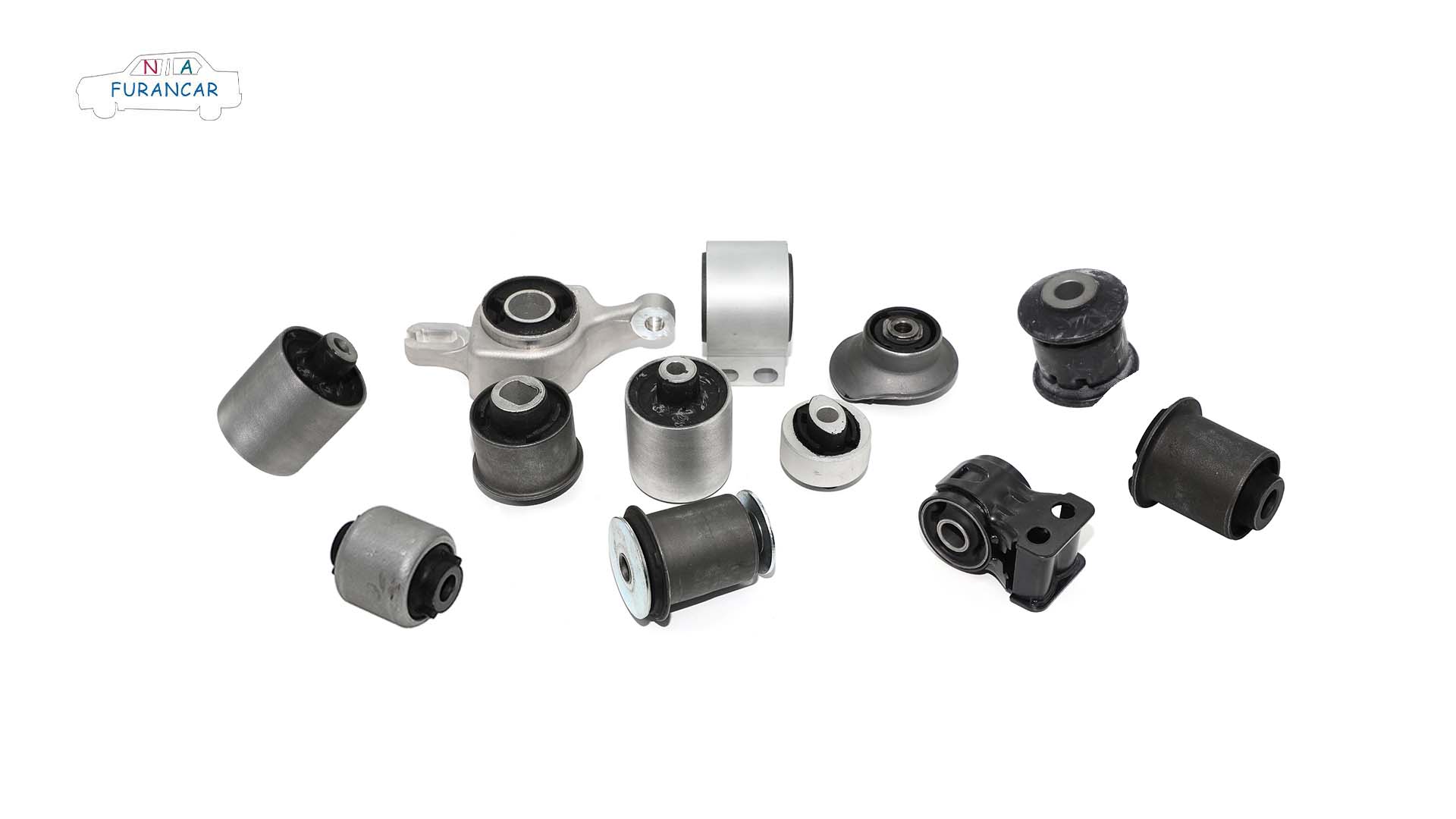
    Chassis bushings can be categorised into various types based on different classification criteria: these include front and rear axle bushings, tie rod bushings, control arm bushings, subframe bushings, hydraulic and non-hydraulic bushings, as well as metal and nylon bushings, and open and closed bushings. Although the classifications vary, the functions they perform are similar.

    Bushing

    Points to note when replacing bushings


    1. Selection of press-fit sleeves

    When removing or pressing in components, select a sleeve of the appropriate size to ensure that the force is applied to the outer ring of the bushing, whilst other parts remain unloaded. Wear safety goggles and gloves when carrying out this work. The dimensional information provided in the Codic product manual can assist in selecting the correct sleeve. 


     2. Press-fit Force

    To facilitate installation, remove any burrs from the inner bore prior to pressing and apply a small amount of lubricant (such as 4240 grease) to the inner bore and the initial section of the outer diameter. Ensure that the press-fit force is not too low; for bushings with an outer tube diameter of 40 mm, the press-fit force for metal outer tubes should generally exceed 6 kN, and for nylon outer tubes, it should exceed 20 kN, with values varying according to the diameter of the outer tube. If the pressing force is found to be too high or too low, check the condition of the inner bore and verify that the correct bushing has been selected.


    3. Confirmation of Installation Position
    During installation, ensure that the solid section is aligned with the horizontal direction of travel. If the product features an arrow, ensure that the arrow points in the horizontal direction of travel. Ensure that the pressing position is centred, with equal lengths protruding from both ends.

    4. Stress Relief
    Once installation is complete whilst the vehicle is raised off the ground, stress concentrations often develop in the chassis system. To resolve this, the vehicle must be lowered to the ground and the steering wheel centred. The fasteners should then be loosened to the specified torque, before being retightened to the standard torque to release the stress and allow the chassis to return to its original state. At this point, the vehicle is as though fitted with a brand-new pair of running shoes, ready to roam freely.