An excavator track usually comes off because the track tension is incorrect, the front idler or track rollers are worn or misaligned, debris is trapped in the undercarriage, or the track chain and sprocket no longer work together properly. The best way to identify the cause is to stop the machine, inspect the entire track system, and check tension, alignment, wear, and damaged components before replacing parts.
If an excavator track keeps coming off after being reinstalled, simply tightening the track may not solve the problem. Repeated derailment often indicates an underlying mechanical issue that needs to be identified. For excavator owners, maintenance teams, equipment dealers, and parts buyers, understanding the cause can help prevent additional damage and unnecessary downtime.
YINTPARTS manufactures excavator and bulldozer undercarriage components, including track chain links, bottom track rollers, front idler assemblies, sprockets, and track adjuster cylinders. These components are all relevant when investigating why a crawler machine repeatedly throws a track.
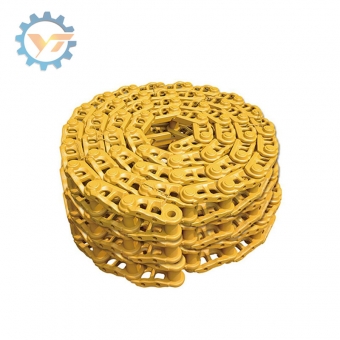
Excavator track chain components used in crawler undercarriage systems.
What Causes an Excavator Track to Keep Coming Off?
The most common causes are incorrect track tension, worn guiding components, accumulated mud or stones, damaged track links, and excessive wear between the track chain and sprocket. The exact cause depends on where the track comes off, the machine's operating conditions, and whether the problem occurs repeatedly on the same side.
Before ordering replacement parts, inspect the undercarriage as a complete system. A worn component can affect how the other parts guide and support the track, so replacing only the part that appears damaged may not resolve the original problem.
| Possible cause | What to inspect | Recommended action |
|---|---|---|
| Incorrect track tension | Track sag and tension adjustment condition | Measure and adjust according to the machine manufacturer's specifications. |
| Worn or misaligned front idler | Idler surface, guiding flanges, alignment, and movement | Check for excessive wear, damage, or alignment problems. |
| Debris in the undercarriage | Mud, rocks, compacted soil, and material trapped around rollers | Remove debris safely and inspect for resulting damage. |
| Worn track chain or sprocket | Track links, pins, bushings, sprocket teeth, and engagement | Assess wear and compatibility before deciding which parts need replacement. |
| Damaged or seized rollers | Roller rotation, uneven wear, damage, and abnormal movement | Repair or replace defective components after inspection. |
These are diagnostic starting points, not a substitute for the manufacturer's service procedure. Track designs and adjustment requirements differ by excavator model, so always use the correct service manual and specified measurement method.
Can Incorrect Track Tension Make an Excavator Track Come Off?
Yes. Incorrect track tension is one of the first things to investigate when an excavator track repeatedly comes off. A track that is too loose may have insufficient guidance under certain operating conditions, while a track that is too tight can increase stress and wear across the undercarriage.
Track tension should not be judged by appearance alone. The correct amount of track sag depends on the excavator model, track configuration, and the measurement procedure specified by the manufacturer. Mud and other materials packed around the undercarriage can also affect a tension measurement.
During inspection, check whether the track adjuster is operating correctly and whether the idler can move as designed. A damaged adjuster, a leaking or malfunctioning tensioning assembly, or a mechanical obstruction may prevent the track from maintaining the required tension.
If the tensioning mechanism needs inspection or replacement, review the track adjuster cylinder assembly available from YINTPARTS. Confirm the excavator model, part number, and dimensions before selecting a replacement.
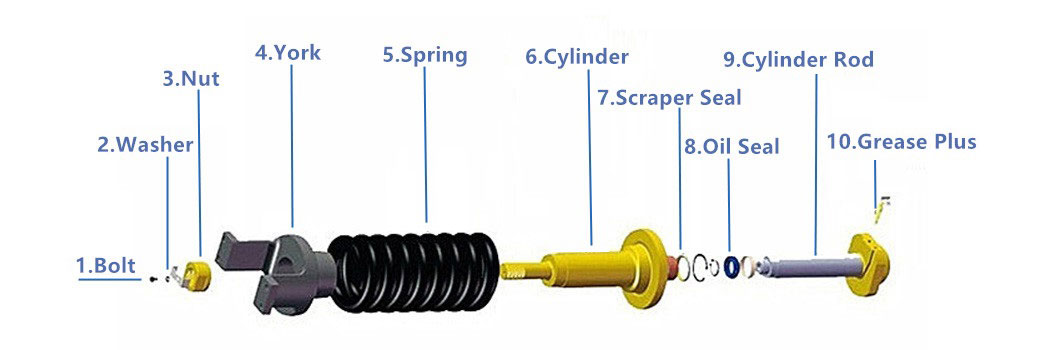
Track adjuster cylinder assembly and its main components.
How Can a Worn Front Idler Cause Track Derailment?
The front idler helps guide the track and works with the track adjustment mechanism to maintain the correct position of the track assembly. If the idler is excessively worn, damaged, or misaligned, the track may not stay properly guided during turning, traveling over uneven ground, or working under side loads.
Look for uneven wear on the idler surfaces, damaged guiding flanges, abnormal movement, and signs that the track is running off-center. Also inspect the idler mounting area and related components. An apparent idler problem can sometimes be associated with worn track links, roller alignment issues, or incorrect tension.
Replacing the idler without checking the rest of the system may leave the original cause unresolved. Before ordering a new part, confirm the machine model and the required idler assembly specification.
For component options and model-specific references, see the YINTPARTS excavator front idler assembly range. The correct selection should match the machine's installation dimensions and undercarriage configuration.
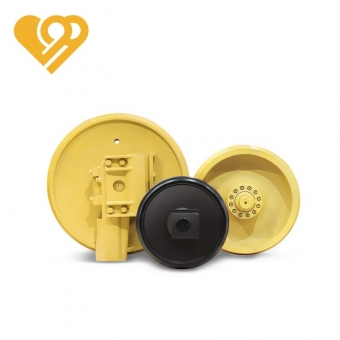
Front idler components used to guide crawler tracks.
Can Worn Track Rollers or Carrier Rollers Make the Track Come Off?
Yes. Track rollers support the machine and guide the lower part of the track, while carrier rollers help support and guide the upper track run on designs that use them. Excessive wear, seized rollers, damaged flanges, or abnormal alignment can interfere with smooth track movement.
Inspect the rollers for flat spots, uneven wear, damaged flanges, oil leakage where applicable, and signs that a roller is not rotating normally. Compare the left and right sides of the undercarriage, but remember that operating conditions and component designs may differ.
If the track repeatedly moves sideways, do not assume that roller replacement alone will solve the issue. The track chain, front idler, sprocket, track shoes, and overall tension should also be checked to identify the source of the misalignment.
YINTPARTS provides a range of bottom track rollers for excavators and bulldozers. When sourcing replacement rollers, verify the part number, mounting dimensions, flange design, and machine application.
How Do Mud, Rocks, and Difficult Ground Conditions Affect Track Stability?
Mud, compacted soil, and rocks can accumulate around the track chain, rollers, idler, and sprocket. This buildup can interfere with normal track movement and make it harder for the track to remain correctly aligned. Large rocks or other foreign objects may also create localized loads or damage components.
Machines working in clay, demolition debris, rocky ground, or other demanding conditions may need more frequent undercarriage cleaning and inspection. Turning sharply on uneven ground or allowing the track to climb over obstacles at an unfavorable angle can also increase the chance of derailment.
When cleaning the undercarriage, follow the machine manufacturer's safety procedures. Stop the machine on stable ground, secure it against movement, shut it down as required, and keep clear of pinch points. Never attempt to remove debris or reposition a track while the machine is moving or while the track system is under unsafe tension.
If the machine works in abrasive or high-load conditions, inspect the sprocket teeth and track chain for wear that could affect engagement. YINTPARTS offers excavator sprockets and segments for different crawler machine applications. Verify the correct part specification before ordering.
How Can You Diagnose an Excavator Track That Keeps Coming Off?
A systematic inspection is more useful than replacing parts based on guesswork. Start with the conditions under which the track came off, then inspect the components most likely to affect tension, guidance, and track engagement.
Practical inspection checklist
- Record whether the track came off during straight travel, turning, reverse travel, or operation on a slope.
- Check track sag using the procedure and specifications in the machine's service manual.
- Remove mud, rocks, and other debris safely before evaluating component condition.
- Inspect the front idler, track rollers, carrier rollers, and their mounting areas for damage, wear, or abnormal movement.
- Examine the track chain, pins, bushings, shoes, and sprocket teeth for excessive wear or damage.
- Check for visible misalignment and compare the condition of both sides of the undercarriage.
- Confirm part numbers and dimensions before replacing any component.
If the track has come off more than once, or if a component is cracked, severely damaged, or displaced, stop operating the machine until the cause has been assessed. Track reinstallation and tension adjustment can involve stored mechanical energy and heavy components, so repairs should be performed by qualified personnel using the appropriate equipment.
Should You Replace the Track Chain, Sprocket, or Idler First?
There is no single replacement order that applies to every excavator. The correct decision depends on measured wear, component damage, part compatibility, and the reason the track came off. Replacing a visibly damaged component without checking related parts may lead to repeat downtime.
For example, a worn sprocket may no longer engage properly with the track chain. A damaged idler may affect track guidance, while incorrect tension can create problems even when the main components appear serviceable. In some cases, multiple worn parts need to be addressed together.
Before ordering a replacement excavator track chain or track link assembly, check the machine model, serial number where applicable, part number, pitch, link count, and installation dimensions. Also inspect the sprocket and idler so the replacement chain is compatible with the rest of the undercarriage.
YINTPARTS manufactures excavator and bulldozer undercarriage components and states that it can produce parts based on customer samples, designs, or technical drawings. For less common machines or customized requirements, share the machine details and existing part information with the supplier before confirming an order.
How Can You Prevent an Excavator Track from Coming Off Again?
Preventing repeat derailment starts with regular inspections and correcting the underlying cause. A track that has been reinstalled should not simply be returned to work without checking why it came off in the first place.
- Check track tension at the intervals and under the conditions specified by the machine manufacturer.
- Clean packed mud and debris from the undercarriage, especially after working in sticky or rocky ground.
- Inspect track links, rollers, idlers, and sprocket teeth for uneven wear or visible damage.
- Investigate repeated derailment instead of relying on repeated track tightening or reinstallation.
- Use replacement parts that match the machine's model, dimensions, and required specifications.
- Keep inspection and repair records so recurring wear patterns can be identified early.
For equipment dealers and fleet maintenance teams, documenting the failure conditions, component wear, and replacement details can also help identify recurring problems across similar machines. This information is useful when planning maintenance and selecting suitable undercarriage spare parts.
Why Source Excavator Undercarriage Parts from YINTPARTS?
Choosing a replacement component requires more than matching a general product name. Correct fitment, machine application, dimensions, and the condition of related components all matter when the goal is to prevent repeated track derailment.
YINTPARTS is the website of Xiamen Yintai Machinery Co., Ltd., a manufacturer of excavator and bulldozer spare parts. Its product range includes track chain links, bottom track rollers, front idler assemblies, sprockets and segments, track shoes, and other undercarriage components. The company also states that it can manufacture parts based on samples, designs, or technical drawings.
When requesting a replacement part, provide the excavator make and model, serial number if available, existing part number, dimensions, and clear photographs of the component. Explain whether the track came off during turning, straight travel, or work on a particular type of ground. This information helps narrow down the component options and supports a more accurate fitment check.
If the root cause is still uncertain, have a qualified technician inspect the undercarriage before deciding which parts to replace. Selecting parts based on a diagnosis is more reliable than assuming the track chain alone is responsible.
Frequently Asked Questions About Excavator Tracks Coming Off
Why does my excavator track keep coming off?
Common causes include incorrect track tension, a worn or misaligned front idler, damaged or worn rollers, debris trapped in the undercarriage, and excessive wear on the track chain or sprocket. Inspect the complete track system to identify the actual cause.
Can loose track tension cause an excavator track to come off?
Yes. A track that is too loose may not remain properly guided under certain operating conditions. However, track tension must be checked against the machine manufacturer's specifications because the correct setting varies by model and measurement method.
Can a worn front idler cause track derailment?
Yes. Excessive idler wear, damaged guiding surfaces, or misalignment can affect how the track is guided. Inspect the idler together with the track chain, rollers, and tensioning mechanism before replacing parts.
Should I replace the track chain if it keeps coming off?
Not necessarily. First determine whether the chain is worn or damaged and check the idler, rollers, sprocket, and track tension. Replace the chain when inspection and measurements show that replacement is necessary, and verify compatibility with the other undercarriage components.
Does working in mud or rocky terrain increase the risk of a track coming off?
It can. Packed mud, trapped rocks, uneven ground, and side loads can interfere with track movement or increase stress on guiding components. Regular cleaning, appropriate operating practices, and undercarriage inspections help reduce the risk.
What information should I provide when ordering replacement excavator track parts?
Provide the machine make and model, serial number where applicable, existing part number, relevant dimensions, and photographs. Also describe the operating conditions and the symptoms observed so the supplier can help verify the correct part specification.
For help identifying suitable excavator undercarriage components, contact YINTPARTS with your machine and part details. Correct diagnosis and accurate part matching are key steps toward reducing repeat derailment and avoidable downtime.