• Rubber auto parts trends

    Rubber auto parts have seen significant trends and advancements in recent years. Here are some of the key trends shaping the rubber auto parts industry:
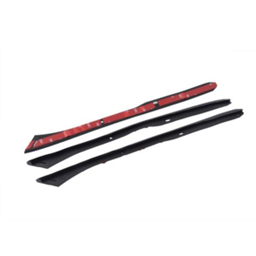
    1695814422794.jpg

    1.Lightweighting: The automotive industry is increasingly focused on reducing vehicle weight to improve fuel efficiency and reduce emissions. Lightweight rubber parts, such as seals, gaskets, and bushings, are gaining popularity as they contribute to overall weight reduction without compromising performance or safety.


    2.Enhanced Performance Materials: Rubber materials with improved performance characteristics are in high demand. Advanced elastomers and synthetic rubbers capable of withstanding extreme temperatures, resisting chemicals, and providing excellent sealing properties are being developed to meet the evolving needs of modern vehicles.


    3.Electric and Hybrid Vehicles: The growing adoption of electric and hybrid vehicles has influenced the rubber parts industry. With the shift to electric powertrains, there is a need for specialized rubber parts to facilitate thermal management, seal battery compartments, and provide electrical insulation.


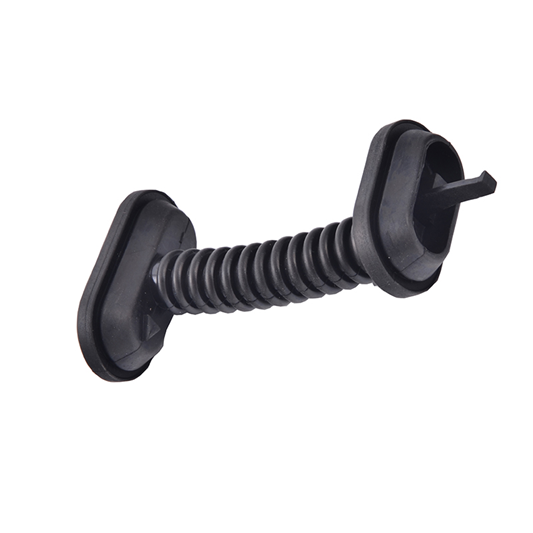
    4.Noise, Vibration, and Harshness (NVH) Reduction: Rubber parts play a crucial role in reducing noise, vibration, and harshness levels within vehicles. Advancements in rubber formulations and design techniques are being implemented to improve NVH characteristics, enhancing ride comfort and overall driving experience.1695814437847.jpg
    5.Smart and Connected Features: The emergence of connected vehicles and advanced driver-assistance systems (ADAS) has led to a demand for rubber parts that can support new technologies. For example, sensors and actuators integrated into rubber components enable functions like tire pressure monitoring, adaptive suspension, and autonomous driving systems.


    6.Sustainable Manufacturing: Environmental concerns have driven the development of sustainable manufacturing practices in the rubber parts industry. Companies are exploring eco-friendly rubber materials, recycling initiatives, and energy-efficient manufacturing processes to reduce their carbon footprint and minimize waste generation.


    7.3D Printing: Additive manufacturing, specifically 3D printing, is finding applications in the production of rubber auto parts. It enables faster prototyping, customization, and the creation of complex geometries, while also reducing material waste. 3D printing technology is gradually being adopted for the production of small-scale rubber components.


    8.   Advanced Sealing Solutions: As vehicle designs become more sophisticated, the demand for reliable sealing solutions increases. Rubber seals, gaskets, and O-rings that can withstand high pressures, temperature variations, and aggressive fluids are essential for critical automotive systems like engines, transmissions, and braking systems.

    Overall, the rubber auto parts industry is driven by the pursuit of lightweight, high-performance, and sustainable solutions to meet the evolving needs of the automotive market. As vehicle technologies continue to advance, rubber parts will play a crucial role in enabling efficiency, safety, and comfort in modern automobiles.

  • Welding Process of Fuel Tank Truck

    | /

    CLVEHICLES.COM has a tank body welding process for fuel tanker truck. Many users who use oil tankers must also want to know how the tanker is made. Now I will introduce the welding of the oil baffle.

    Welding of the oil baffle plate of the refueling truck: the main work is the welding of the oil baffle plate in the cylinder body. According to the above, three oil baffle plates are generally arranged inside the 6M long cylinder body, and the cylinder body is divided into four compartments. Each oil baffle plate The plate must be intermittently welded with the cylinder body. If it is a separate tank, the oil baffle will be replaced by a partition, and continuous welding must be carried out. The length of each girth weld is based on the aforementioned 6-7.5M length. The continuous welding is calculated according to half of the welding length. The total welding length of this station is about 20M, and the welding speed is calculated at 5mm/s. The welding time is about 67 minutes. Considering the poor welding conditions in the compartment and the different compartments The delay in welding preparation time, the multi-welding time of a single-section cylinder takes about 1 hour and 20 minutes, and 2 stations are needed for the calculation of a 12M long tank, so consider a station side by side as the oil baffle welding station.


    Fuel truck tank docking: the main work is tank docking and TIG welding bottoming. If the small tank is not segmented, it can be used as a tank storage station. Tank body docking mainly depends on adjusting the position of the roller frame to align the tank body, so the length of the two tank body roller frame stations can be considered when designing the station. The welding speed of TIG welding is calculated according to 2.5mm/S. It takes about 50 minutes to join the circular seam of 7.5M. The docking takes about 2 hours, so consider a side-by-side double-roller station, and a 13M long station.

    Oil tank truck
    Head installation: The main work is head installation and TIG welding. Head alignment and butt welding require special tooling to ensure that the welding speed and workload are the same as the butt joint of the tank body mentioned above. According to the aforementioned TIG welding speed, it is estimated that the bottom welding of the head will take about 1 hour and 40 minutes. Considering the head The installation tooling ensures fast positioning. It is estimated that a single tank can be completed in about 2 hours and 40 minutes. Therefore, it is enough to consider a side-by-side double-roller station, and a 13M long station. Adopt two cans to work at the same time to ensure the working time. Because the installation of the head needs to lift the two sections of the head from the two sections, it is necessary to place the two sections of the station at a distance of 2M. Head welding and cylinder body welding are mainly for the grinding and repairing of the tank rotating frame on the tank body, the bottom welding of the cylinder body and the head butt joint ring seam, and the cover welding. According to the above, the circular seam is calculated according to 6~7.5M, and the cover welding speed is 5mm/s, and it takes about 1 hour to 1 hour and 15 minutes. According to experience, to achieve better welding quality, it is necessary to completely remove welding defects And grinding, so the estimated grinding time is about 40 minutes, plus the time for the tank to be hung on the tank rotating frame, the total time-consuming is about 2.5 hours, so a tank station is considered. And 13M long station. Adopt two cans to work at the same time to ensure the working time.


    Installation of tank reinforcement plates: mainly used for the installation of all reinforcement plates such as longitudinal reinforcement strips, transverse reinforcement strips, and pipe box bracket reinforcement panels at the bottom of the tank. Generally, two longitudinal reinforcement strips are set at the bottom of the tank, and the size is about 0.4*12M; each horizontal reinforcement board is about 0.6*0.2M, and there are about 12 pieces within the length range of 12.5M; each tube box bracket has 2 pieces About 0.1*0.1M reinforcement plate, about 24 pipe box brackets, each tank body welding length is about 80M, considering that the workpieces in this station are scattered, each reinforcement plate needs to be marked and positioned, so it is arranged in this station Three welding machines work at the same time for spot welding of various reinforcement plates.